Showing posts with label Personal. Show all posts
Showing posts with label Personal. Show all posts
Monday, June 1, 2020
Wednesday, February 20, 2019
Pete Dog 2004-2019
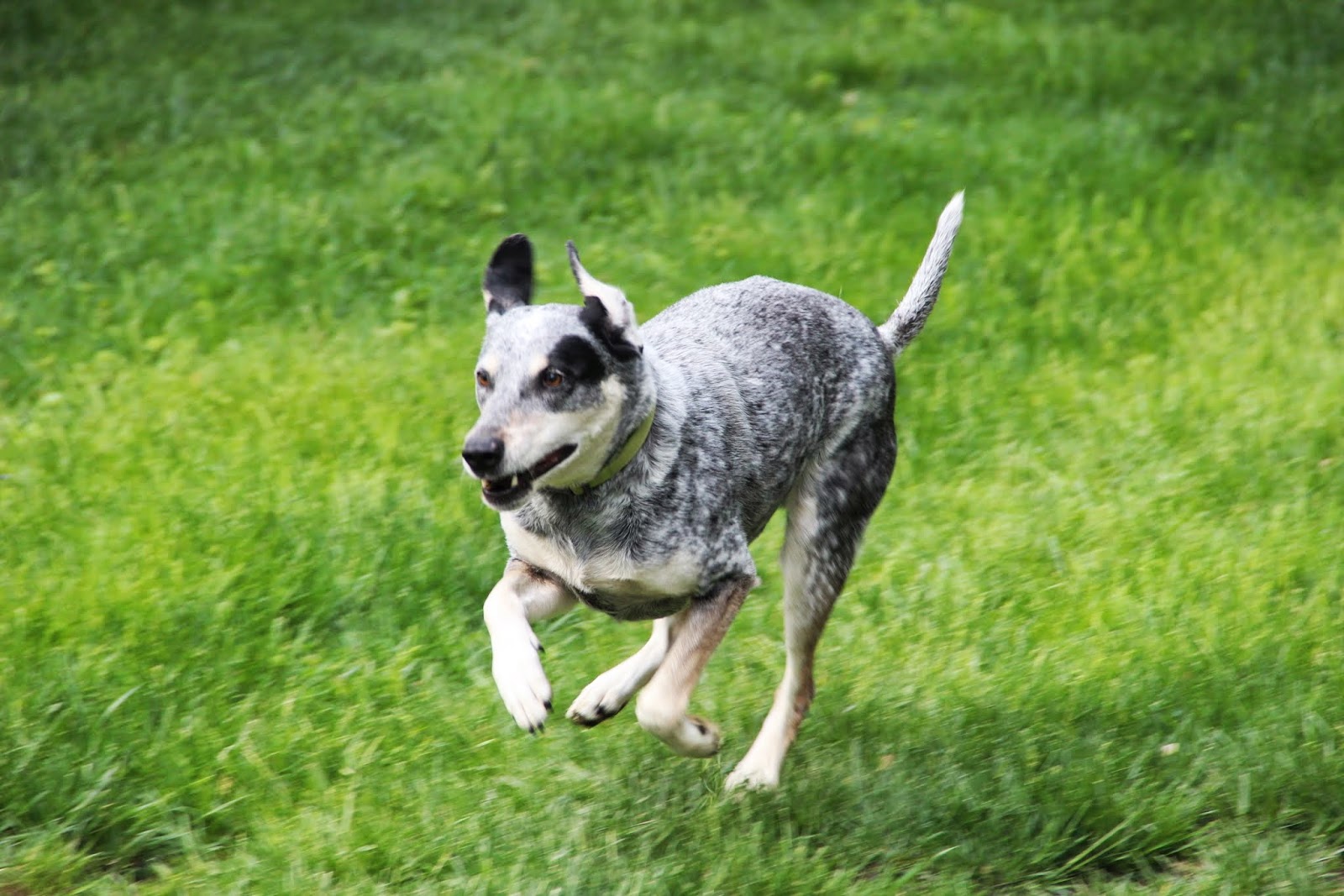
When I saw Pete for the first time he was in a kennel, with eight other littermates, at a dog shelter in New Jersey. He was humping one puppy while growling at another one, who was too close to the food dish. The rest of the puppies were nice, either licking at my hand or wagging their tails.
My husband, Vic, and I were there to get a second dog to keep Bow, our restless first dog, company. We were told the puppies would not be up for adoption for another week. We thought that sounded fine, naively thinking that we would return with Bow to choose a puppy that met his approval. We agreed we'd take any puppy but Pete.
When we came back a week later, all the puppies were gone or pending adoption except Pete, who was in his own kennel now, wide-eyed and panting. We brought him into a room with Bow. We just wanted to see what would happen. They could have cared less about each other, and Pete could have cared less about us, he checked every corner of the room, licking up any morsel of food he could find. We liked his self-assurance and cavalier attitude and said, why not, and took him home.
 |
| Pete, with his mouth open. |
For the next few months, Pete terrorized our house. He pooped everywhere and was difficult to housetrain. He ate shit—his own, Bow's, whatever he could find on our walks. We had two trusting rats as pets at the time. Pete killed one of them and mangled the other so badly that I had to kill it. We learned that Pete was very sick, hosting several parasites, and visited the vet several times to purge him of one worm and then another. Each time the vet attached him to an IV and pumped him full of saline to combat severe dehydration. The vet told us Pete had a lot of spirit and that other dogs would be dead already. We felt lucky. But once Pete was healthy, his energy and destructive force redoubled.
We were renting a house, then, in a quiet wooded area in Berkeley Heights, New Jersey. Pete gnawed on the window sills, drywall, and siding. He tugged on exposed cords. He dug huge holes in the yard. He ate every rodent he could find and had diarrhea weekly. He barked at neighbors and snapped at children who approached too quickly. He was mean to Bow. Left unsupervised and out of his crate for mere minutes, Pete destroyed his surroundings. He tore up our books, shoes, rugs, furniture, and his own bed. It always happened so fast. Chew toys lasted mere seconds.
Each time Vic and I asked, Should we give Pete away? Should we ditch him at the side of the road?
Our friends told us, Pete is such a good boy. We countered, You want him?
Nobody did.
 |
| Pete and Vic in the Wind River Range, WY. |
But there was another dimension to Pete, after the first few months when he was no longer ill. As long as we were right with him, Pete obeyed. He became house-trained. He stayed when we told him to, and went to his crate to sleep. He rarely whined. Unlike Bow, he didn't run away. We could take him on long hikes off leash, on leash, with a backpack or without, and he would press forward, wide-eyed, panting, and perfect.
Pete loved us and the food we gave him. He would do anything for it. And so we were tricked, sort of, into loving him and his full-on, fierce dogginess. Pete could be wild and terrible, but also sweet and loving with Vic and me. And so we kept him and loved him and thought, We just need to wait until he's not a puppy anymore.
We waited for seven years.
 |
| Pete being the best listener on the trail. |
On a snowy Sunday we were playing fetch in our new backyard in Maryland. This was a usual activity for Pete. He loved to leap and twist in the air and catch a ball at the apex of its arc. We tossed the ball over and over again, and when we were tired we stopped. It wasn't until later that day that we realized something was wrong.
The doctor told us that Pete had ruptured two discs in his spine. He explained that it had happened with such explosive force that Pete had wrecked his back, his spine, and may never regain the use of his rear legs, bladder, or bowels again. But after that, the same doctor performed a hemilaminectomy on Pete, and our boy slowly recovered. It took many months of physical therapy and patience, mostly provided by Vic, but Pete walked and then bunny-hopped, and eventually ran again and we felt like the luckiest humans to still have our dog.
 |
| Vic, working on Pete's flexibility and muscle tone. |
The Pete who survived that experience was slower in body, but not in mind. He remained spunky and his goals remained the same: to play fetch, a slower form, anyway, and to eat as much shit as he could get away with. His mania seemed to subside. Pete was less of an asshole to Bow and to people in general.
That remained Pete's normal for about four more years. He survived Vic's cancer and helped me survive it. He survived a cross-country move to California and accepted Nate as my new partner. He survived Bow becoming hooked on human feces in San Francisco. He survived my pregnancy and the birth of our little human, even though he was not happy about it. And he and Nate became companions and allies, especially in the kitchen, where Pete's food drive and Nate's propensity to shower the floor with crumbs aligned.
 |
| Nate and Pete snuggling on the couch. |
Over the last several years, Pete morphed into a slow, sweet dog who woke up for food, rubs, and cuddles. After Bow died, Pete discovered that my daughter was a reliable source of dropped food and his position toward her softened. He was sweet to her and allowed her to share his bed with him when she needed some soft fur to snuggle into. I hope her memories of him have formed enough to last.
Two years ago Pete started wearing an all-day diaper because he couldn't feel his need to pee anymore. He stopped playing fetch and could barely make it around the block on our walks, but he never lost his lust for dog or cat shit. If he managed to grab a morsel on a walk, it would throw his bowels out of whack for days, but he didn't care. The smell of his own shit in the house didn't seem to bother him: poop snacks have always been his favorite. With every new ailment we'd say, Maybe this is it? Every time we'd leave we wondered whether Pete would be alive upon our return, but he kept going, at an imperceptibly slower pace, until this weekend, when he didn't.
 |
| Pete shares his bed. |
Pete and Bow taught me how to love in many ways, and taught me what it means to be in charge of the pack. I remember times in my life when I didn't have a dog and I was a miserable human.
Vic's father told me, "I'm a better person with a dog."
I'm not sure I am, but I know I'm my full self with a dog in my life.
I know Pete is gone because crumbs are starting to accumulate in the kitchen like tiny monuments. And in this moment, I'm not sure what to do except remember him, share him, and pass that love on to my daughter.
Here's to you, Pete. You were the best dog.

Thursday, October 11, 2018
Climate shift
Did you read the UN's Climate report? I did. And I had to sit down after reading it because it felt like a punch to the gut.
After reading the report, my husband and I said, what steps can we take now, right this minute, to reduce our carbon footprint? And I'm urging you and your families to do the same. Our sacrifice is urgent and necessary. We are facing a global threat, not unlike a world war. If this were a world war, what sacrifices would we be asked to make? I'm willing to ration my use of gasoline and travel and meat to keep our planet habitable. Think about what small sacrifices and then larger ones you are willing to make and then make them.
Start here.
Although my husband and I are continually working to reduce our carbon footprint, the more pointed measures we will begin to take, like cutting our plane and car travel, will be difficult adjustments. And no matter what steps we do take in our home -- reducing meat consumption, growing our own food, buying food that is grown locally and organically, drying laundry on a clothes-line, taking 3 minute showers -- our carbon footprint will not shrink much, even when cutting travel, if the US does not take responsibility as a nation for its carbon emissions. Our civilization has become dependent upon burning fossil fuels for energy. We must stop burning fossil fuels if we hope to preserve that civilization.
We want to leave a world for generations of humans to grapple with for thousands of years to come. Please tell your congressional representative that this is a priority for all of us, for our survival.
Tuesday, July 10, 2018
Castle Rock:
is nearby.
is full of people and poison oak.
does have beautiful views.

does smell of warm pine sap in the sun.

does allow my toddler to scramble up and down paths semi-independently ...


... and then pass out on my back.

Tuesday, December 12, 2017
Home Depot Christmas tree

When I purchased this tree from Home Depot in 2000, part of the appeal was that I could keep it stored and decorated year-round and just haul it out for the holidays. When I read that an artificial tree would only be considered environmentally friendly if it were used for at least 15 years (turns out it's 20), I was all in.
In 2014, when I moved from Maryland to California, the fully decorated tree came with me. When we arrived, my soon-to-be husband, who had never experienced the tree, said we didn’t have room for it in our apartment and should sell it. I said, no way. We unpacked it, and with only five glass ball ornaments broken, he agreed the tree should stay.
I’m really proud of this tree. It’s my favorite part of the whole Christmas deal. I hope you all have a similar talisman against the weirdness of the season.
Merry Christmas, Happy Holidays, and Peace, friends. Sending love and hope for humanity, and this tree, in the new year.
Tuesday, August 1, 2017
Bow dog
Our old Bow died today.

His sweet and tender dotage - with Vic, with me, with Nell - eclipsed his crazed, marauding youth. He turned out to be the best companion, snuggler, bear sniffer, and Cheerio eater around. We miss him and will continue to keep him with us always.

Thank you to Didi Guse for illegally adopting him because she knew we belonged together in my apartment.
Thank you to the doctors who saved his life when he was two by removing a box of unused tampons from him stomach, describing the mass as the tangled innards of a melon-sized baseball, and asking me if I wanted to see it. Of course I did.
Thank you to Vic for repeatedly threatening to throw Bow against the wall or drop him off in a Walmart parking lot, but never doing so.
Thank you to Nate for adopting Bow as your own.
Thank you to everyone who let Bow lick your ears, or stare deeply into your eyes, or whack you with his tail in greeting.


Thank you Bow for imprinting on so many people's lives. Thank you Bow for loving Vic even when Pete was afraid to. Thank you Bow for saving me again and again by waking me up in the morning and telling me you needed me. Thank you Bow for taking me outside and keeping me there for hours at a time, listening, looking, smelling.

Thank you for sharing your life with us, Bow Bow.

My two year old daughter, Nell, says, "Bow Bow? Bow Bow, come!" I tell her, "Bow can't come. He's dead." and she cries. I don't think she knows what it means exactly, but maybe when the "sealed river rock" cremation package I purchased at the vet is delivered home (what was I thinking?), that will be a starting point to the conversation.
Saturday, August 1, 2015
Bow behavior
In the afternoon, Bow wants to be fed. He wakes, looks for me,

locates me, and stretches.

If I haven't immediately paid attention to him, he grabs something nearby, like a pillow, and shakes it until I say, "Bow,"

at which point he calms down and waits a little longer for dinner.

Tuesday, December 30, 2014
Detroit! Notes from last Christmas
A year ago, Christmas Eve Day, I took an eight hour walking and driving tour of Detroit offered by the historian/artist at detroiturbex.com. The tour focused on the history of Detroit--its changing neighborhoods, communities, buildings of worship, and system of public education--as well as prospects for the future in the midst of the city's bankruptcy proceedings. Because I'm a teacher, my tour guide adapted the tour to include as many schools as time allowed.
I haven't used my guide's name thus far because he uses many aliases. He explained that he uses an alias partly to remain anonymous and partly because he "deals with a lot of characters in different contexts". He wants the city he's covering to be the focus, not him. He has a lot of clients who want to remain anonymous as well.
Below are compiled notes, photos, and emails that I sent to a friend just after the experience. I'm posting them now in part to: remind myself of what I learned last year, and to compare what I saw last year to what I saw this year in Detroit over the holidays. (I regret that I did not take more photos last year, nor any this year, but the best photos of the spaces I visited in Detroit, and of Detroit in general, can be found at detroiturbex.com.)
December, 24th 2013: At quarter to nine in the morning it is thirteen degrees outside. I drive downtown with the Subaru's seat-heat on. I am wearing a ski jacket, hat, gloves, and snowpants. I'm prepared for a day outside. The drive along E. Warren Ave. to midtown takes ten minutes. I park outside the restaurant where I am scheduled to meet my guide.
The restaurant looks open. I could use some coffee so I walk inside. Moodymann is playing in the background, the windows are steamy. Three people are busy behind the counter. I ask for a cup of coffee.
One of the women says, "We don't open 'til eleven, do you mind drinking our coffee? I mean, it's strong. It's what the staff drinks."
"No. That sounds perfect!" I say. This is my favorite Detroit. The doors are open. We're all here. There is no formality, no rigidity, no separation.
My guide shows up five minutes later. He is a guarded, bearded man, in his late thirties. He is very professional. I appreciate that. There's no small talk. He goes right into the tour.
I drive the car. My guide has the plan. He immediately takes us to an area downtown that was a forested railroad bed six months ago. Now, it's a pedestrian walkway and bike path. It's a huge tract of land. Apparently older pedestrian/bike paths now lead from apartment buildings to a year-round farmer's market to office areas downtown. Newer paths, including this one, will lead from other residential neighborhoods to more office spaces. All of these sections of the city used to be impassable on foot or by bike because of the way the freeway is laid out--it crisscrosses downtown. The paths pass under the freeway, are lit, and patrolled. This seems like obvious, cheap, urban infrastructure, but it is completely new to Detroit. We drive to three new schools that line these bike paths. There are also newly renovated buildings that are now multi-use spaces nearby. A new Whole Foods sits near Wayne State University--the only WF in the Detroit area. This is a huge fucking deal. Everyone in Detroit is jazzed, including my guide, that WF would invest in downtown.
I learn that my guide did not grow up in Detroit, but has lived here for almost seven years. He knows pretty much everything you could think of to ask about the city. He is not interested in "ruin porn"--photos of urban decay--he is interested in capturing the history and context of this evolving metropolitan area through photography. My guide is telling me so much, I start taking notes in order to keep track.
A few things become immediately apparent:
(1) Because Detroit is huge, we will barely scratch the surface in eight hours. (2) The city is filled with pocket communities whose inhabitants don't necessarily want to be consolidated.
(3) There is so much unused, unoccupied space--fields, forests, between neighborhoods and even houses that it makes the efficient use of resources nearly impossible.
(4) As a result, this spread out city cannot all be managed. A lot of funding for basic services is being provided by private investors.
We stand out in the freezing cold and my guide tells me about the history and movement of different community groups. We spend a lot of time at abandoned schools and churches for two reasons:
(1) To get a feel for these former community centers/how many have been closed/how many communities are gone.
(2) To see how rapidly natural cycles take hold.
We go into buildings that have been closed for one to three years mostly. Once the windows are out and water enters through the roof, natural geological processes take over. It only takes a coupe of freeze/thaw cycles for the plaster and concrete and brick to crumble. Anything constructed after the war, with steel beams, has a better chance. The Detroit Public School System has its own police force to try to protect closed buildings from scrappers.
I learn that scrapping became a big business in the mid to late 2000s in Detroit, when most of these schools were closed.
 |
| The newly cleared bike path. It will be paved, lit, and sodded by summer. Paid for with private funds. |
 |
| One of the DPS charter schools along the pedestrian path. |
 |
| Close up of an old Pontiac. |
 |
| An abandoned house that has been purchased and sold several times--with the intent to gut and refurbish. It has sat under current ownership for ten years. |
 |
| The gymnasium of an elementary school near Jefferson Ave. The school had been closed for one and a half years. |
 |
| A Catholic church that was built in the fifties in a Polish neighborhood. When the Polish community moved out, the neighborhood was no longer Catholic, and attendance at the church went from 7000 to 500 over a decade. |
He said, "It's all about building trust in these towns."
We tour a series of schools--elementary, middle, high--and discuss the evolution of school closings over the last several years. One of the first major schools to close was Cass Tech. It was an amazing science and art school--state of the art in its day. A new Cass Tech was built right next door, but they didn't have a plan for the old building. It was left as is--abandoned. Scrapping hadn't become a livelihood in Detroit yet, and so the abandoned Cass Tech sat. Detroiters were really upset that all the equipment, books, etc. were left in the old school.
Beyond being unbelievably wasteful, it seemed an unhealthy sign to leave a building that way, a sign that DPS or its school board was corrupt and that corruption was on display. My guide told me that Detroiters hoped that Cass Tech could be reopened as a community center, but after being closed for a few years it was already too damaged, at which point the building became a PR nightmare, a liability, and a reminder of better days in Detroit. As a result, the old Cass Tech was demolished.
We walk the old Cass Tech footprint.
My guide explains that when it became clear that hundreds more schools would begin closing starting in the late 2000s, a new closing plan was put in place so Cass Tech wouldn't happen again and demolition (expensive) could be avoided in favor of sales.
My guide outlines the plan below (taken from my hasty notes):
(1) Close schools that have terrible attendance and/or that are too costly to maintain (old). Many of these schools would have an ancient, about-to-bust or busted boiler.
(2) Once closed, remove all DPS equipment from the building. Try to sell the building. In the meantime, police guard buildings--DPS police.
(3) After six months to a year, guarding by police becomes too expensive, so set up infrared cameras and remove metal (lockers, pipes, wiring). Police drive by.
(4) After one/two years, if the building hasn't sold and there is no rebound in the neighborhood, stop patrolling. Inevitably scrappers come in, if they haven't already, and remove all the metal that's left. They leave the building open for the homeless and others. Then the school buildings are essentially abandoned by the city.
Each school we tour is in a different stage of disrepair. In the best case, the lights/heat still work, and some programs are being run out of a section of the building (usually taken over by a private education entity). These schools have lockers on the walls. Schools that are actually closed, but still have a chance to be purchased or salvaged, have a door open, with all the lockers removed, and no lights, but they're fairly clean, and the windows are mostly intact. The worst cases are schools that have every metal window frame ripped out, drag marks or tiles missing on the floors from pilfered metal, glass everywhere, homeless huts in rooms, and staged metal near doors. If there is too much metal by a door, my guide does not take us inside a building because it means that someone is actively collecting scrap.
Unfortunately, most of the schools we see in the afternoon are already in bad shape.
My guide explains that there are three types of scrap yards in Detroit. We visit all three (I have no photos). There are legitimate yards that require documentation for the scrap collector and their metal. These yards have lots of neatly organized metal that is heavily guarded. There are semi legitimate yards that may not require a collector's full ID, but still require paperwork on their metal. Like anything, this paperwork can be forged. The third type of yard is illegal and usually run out of the back of another business or out of someone's home. Scrappers can bring a stolen metal bust to the door, get pennies on the dollar for it, and the metal will be taken and broken down by the yard owner. In one illegal yard we see a sledge-hammered eagle that my guide says was probably taken off a municipal building.
We meet one scrapper who my guide is friends with. The man is an ex con who cannot find enough work to pay his bills, which is why he scraps. The man wears a Lions jersey and heavy workboots.
We do not have time to go to any established neighborhoods, of which there are many. We do visit newly opened or reopened schools, housing developments, and some strangely vibrant areas that are not new. Corktown and Brightmoor stand out.
Corktown, an old neighborhood that is being revitalized, is just west of downtown on Michigan Ave. It is the neighborhood where Tiger stadum stood. That's where I went as a kid to watch my favorite Tiger, center fielder Chet Lemon, play baseball. I remember paying $2 for great seats near home plate. The stadium was torn down in late 2000s, but the baseball diamond is still visible behind a fence at the corner of Trumbull Ave. and Michigan Ave. There are new housing developments, bars and restaurants in the area.
Brightmoor is northwest of downtown. Most of the industrial plants back in the day were right on the water, the Detroit River, obviously polluting. The soil where the plants stood (car manufacturing, tire manufacturing, coal-fired power) is mixed. Some sites are still toxic. The waterfront should be developed, should be where the money is, but building permits have been hard to obtain because of this toxic soil. Clean up has been a slow process, but it is happening. Brightmoor, north, has always been considered on the outskirts of the city and remains underdeveloped. It's now a subsistence farming, artist, and squatter community. There is decent soil there.
My guide explains that the way Brightmoor works is, people move in, squat, and if they can hack it for a few years, they've earned their right of passage and they're considered a part of the community. It sounds like this is a really close group of people who live and work together, and keep their patch of community thriving. We pass a few green houses. I note that my car thermometer reads fifteen degrees outside. And we can see tomatoes growing in a hothouse across the road.
My guide tells me that Brightmoor still has arson. And that the city doesn't provide services out here. There are maybe three or four houses per city block. There are no operating schools. The children are mostly home-schooled.
This seems like a hard community experiment. I look forward to hearing more about the results in the future.
Detroit was not cold this year like it was last year. It was wet and foggy. The fog was so thick that I couldn't see the cityscape clearly as I drove through. From the Detroit River, I heard freighters sounding their fog horns as they passed each other in the channel. It's a loud, clear, and close sound, perhaps a distinctly Detroit sound.
 |
| Old cars in a lot. |
 |
| Police parked at a recently closed school. Decorative metal from the roof is already being pulled. |
 |
| Renovating for Corktown apartments. |
 |
| One year vacant elementary school. |
 |
| Brightmoor community theater. |
My guide explains that there are three types of scrap yards in Detroit. We visit all three (I have no photos). There are legitimate yards that require documentation for the scrap collector and their metal. These yards have lots of neatly organized metal that is heavily guarded. There are semi legitimate yards that may not require a collector's full ID, but still require paperwork on their metal. Like anything, this paperwork can be forged. The third type of yard is illegal and usually run out of the back of another business or out of someone's home. Scrappers can bring a stolen metal bust to the door, get pennies on the dollar for it, and the metal will be taken and broken down by the yard owner. In one illegal yard we see a sledge-hammered eagle that my guide says was probably taken off a municipal building.
We meet one scrapper who my guide is friends with. The man is an ex con who cannot find enough work to pay his bills, which is why he scraps. The man wears a Lions jersey and heavy workboots.
We do not have time to go to any established neighborhoods, of which there are many. We do visit newly opened or reopened schools, housing developments, and some strangely vibrant areas that are not new. Corktown and Brightmoor stand out.
Corktown, an old neighborhood that is being revitalized, is just west of downtown on Michigan Ave. It is the neighborhood where Tiger stadum stood. That's where I went as a kid to watch my favorite Tiger, center fielder Chet Lemon, play baseball. I remember paying $2 for great seats near home plate. The stadium was torn down in late 2000s, but the baseball diamond is still visible behind a fence at the corner of Trumbull Ave. and Michigan Ave. There are new housing developments, bars and restaurants in the area.
Brightmoor is northwest of downtown. Most of the industrial plants back in the day were right on the water, the Detroit River, obviously polluting. The soil where the plants stood (car manufacturing, tire manufacturing, coal-fired power) is mixed. Some sites are still toxic. The waterfront should be developed, should be where the money is, but building permits have been hard to obtain because of this toxic soil. Clean up has been a slow process, but it is happening. Brightmoor, north, has always been considered on the outskirts of the city and remains underdeveloped. It's now a subsistence farming, artist, and squatter community. There is decent soil there.
My guide explains that the way Brightmoor works is, people move in, squat, and if they can hack it for a few years, they've earned their right of passage and they're considered a part of the community. It sounds like this is a really close group of people who live and work together, and keep their patch of community thriving. We pass a few green houses. I note that my car thermometer reads fifteen degrees outside. And we can see tomatoes growing in a hothouse across the road.
My guide tells me that Brightmoor still has arson. And that the city doesn't provide services out here. There are maybe three or four houses per city block. There are no operating schools. The children are mostly home-schooled.
This seems like a hard community experiment. I look forward to hearing more about the results in the future.
 |
| A garden in Brightmoor. |
 |
| This is a synagogue that was turned into a baptist church. A common transition. |
 |
| A famous training facility for boxers like Joe Louis. |
 |
| The Brewster projects downtown which were being demolished when we arrived. |
By now the sun is going down. My guide discusses the history of Detroit and the failure of the Chicago model for certain ethnic groups in Detroit. We drive by iconic ruins and works of art in the city, but by the time we get out of the car the sun is gone. My guide keeps us away from the Heidelberg Project, saying it's crap. I don't argue with him.
I drive us back to the resturant where we first met in the morning. They are busy now. I feel energized. My guide and I shake hands, say a few parting words, and go our separate ways. My head is stuffed full of information, the history of the city mixed in with my own history.
Returning this Christmas, 2014, I am still processing what I learned last year. Detroit is out of bankruptcy, there is new construction downtown, and public and private funds are pouring in. There is a new rail line going in on Woodward Ave.--M-1 rail--that looks like it should be more useful than the "People Mover" was. But the neighborhoods, schools, and houses of worship I visited last year were in the same state of disrepair. The city is still huge and now it's certainly rangy. Detroit was not cold this year like it was last year. It was wet and foggy. The fog was so thick that I couldn't see the cityscape clearly as I drove through. From the Detroit River, I heard freighters sounding their fog horns as they passed each other in the channel. It's a loud, clear, and close sound, perhaps a distinctly Detroit sound.
Sunday, December 7, 2014
Birthday candle
Sweden is dark in the wintertime. In December, the sun is only visible for seven hours on a clear day. To keep the darkness at bay, Swedes turn on lights, set candles in their windows, and put up festive decorations for the holidays. I'm familiar with these traditions only because my sister-in-law lives in Sweden with her husband and two baby girls.
I admire pretty much every single thing about my sister-in-law.
Today is her birthday.
Anna, in solidarity with your Arctic circle plight, I'm lighting a candle in my window. There will be luminaria to follow on Christmas Eve. I love you. I'm so grateful to have you in my life. Happy birthday.

Friday, November 28, 2014
Diaper report
Moving is difficult for dogs, it was difficult for mine.
The first week in our new place, Pete, the twelve year old puppy with a bad back, barked incessantly whenever I left the house. I could hear him "bark, bark, bark!" as I walked down the street to the grocery store, or around the corner to the bus stop.
It sounded like he was saying, "Where the fuck are you going? You can't leave me here!"
I fed him treats before I left.
He ignored them.
I felt terrible.
Pete is smart though. After a week he stopped barking and started eating his treats. He knew I would be back.
Bow, the thirteen year old, who is not as bright or as straightforward as Pete, had a harder time adjusting.
Bow didn't bark when I left the house that first week. He paced. He whined a little. He curled in a ball and tried to sleep. His anxiety developed more fully over the next several weeks when I started my job and was away from home for longer periods of time. Bow expresses his anxiety volumetrically through his bladder. He can pee a lot.
Male dog diapers can be purchased at any pet store. They are stretchy, washable, cloth girdles that have a highly absorbent pad in the middle and velcro tabs on either end. They are easy to put on and they make a pleasing velcro rip sound when you remove them. Bow is not embarrased by his diapers. They are bright blue.
In those first few weeks, my partner and I wrapped Bow in two diapers every time we left the house. We learned quickly that one diaper was not enough. I returned home from work first and Bow's diapers would always be full.
I was mad at myself. I was mad at Bow.
My partner and I texted each other at the end of our work days. Things like:
"I'm heading home now."
"Okay. Hope you had a good day, love. I'll head out in an hour."
But our nightly texts quickly turned to:
"Bow peed again."
"Crap!"
"No crap, just pee."
"Sorry, love. Be home soon. I'll do the laundry tonight."
"Thanks, babe."
They continued that way for several weeks:
"Peed again. Both diapers. Maybe we should take him for longer walks in the AM? Hire a dog walker during the week?"
"We'll talk about it when I get home."
We called these nightly texts The Diaper Report. We developed a shorthand:
"Peed."
"Both diapers?"
"Yep."
"Sorry love."
"Peed. One diaper."
"Bow!"
"Peed?"
"Early. Both diapers."
"Peed. Full diapers."
And it went on that way for over a month.
My partner and I washed diapers in the sink, in the washing machine, and in the bath tub. We bought an extra set of diapers. We searched for items of clothing and bedding, aprons and bathroom mats, anything we could convince ourselves needed washing, in order to have an excuse to waste water on washing Bow diapers.
We told Bow we loved him. We told him he was a good boy. We praised him when he peed outside. We plied him with treats. At first, nothing but staying with him seemed to calm his anxiety.
But at some point in those first two months, the Diaper Report started to read:
"No pee!"
"No way!"
"Yes way!"
And:
"Pee free again!"
"That's four days in a row! Way to go Bow!"
Bow doesn't seem anxious when I leave the house anymore. Sometimes, when there's a break in our routine, he pees in his diaper. But I think he has adjusted to his new space and the new routine and our days no longer end with a Diaper Report.

Thursday, August 7, 2014
Indigenous species
The dogs and I moved. We miss the yard, the native plants, and the insects that pollinate them.


Luckily, native plants and insects are hardy and will thrive on their own.
Subscribe to:
Posts (Atom)